


The Minimum Bail-in Data Template replaces the previous Bail-in Data Set.
Initial submissions are required this year as part of dry runs. Our insight highlights current developments and solution approaches.
Featured Insights

Finbridge conducted a Benchmarking Study in the field of Resolution Planning. This posting gives an overview of the study’s essential findings and an outlook for 2024.

Both the ECB and the EBA are currently working in parallel on the topic of an integrated reporting system. This shall allow financial institutions to provide comparable, uniform and redundancy-free data. In this article, we give an overview of current delevopments and explain the application using concrete examples.

Liquidity in Resolution is one of the seven dimensions of the EfB and one of the current working priorities of the SRB. Apart from further literature about liquidity by the FSB and the ECB, the SRB has published three publications about liquidity in resolution on its website. We analyse the content of these publications and give an overview of existing and upcoming requirements.

Insurers must address fundamental strategic issues. It is more important than ever to anticipate emerging trends and prepare for change. For insurers to keep up, they need to leverage targeted technologies to increase digital maturity across the entire customer relationship and value chain and provide their customers with a seamless, unique and tailored service experience. Tomorrow's insurers will have little in common with those of today. Six theses on how new technologies and the availability of enormous amounts of information will fundamentally change the world of insurers.

About eight years ago, the Single Resolution Mechanism entered into force and only shortly after, the Single Resolution Board (SRB) began its work in Brussels. Since then, many areas of resolvability planning have progressed well and banks are receiving ever more specific guidance and obligations. An overview of recent publications and current priorities.

In the course of teh transition to ISO20022, the European payments infrastructure will change fundamentally and enormous opportunities in terms of process efficiency and an optimized customer experience will open up. Even though the integration of the standard is not mandatory from a regulatory perspective: To keep pace with international developments, extensive implementation projects lay ahead of European banks. In this article, we provide a brief overview of what is at stake and when the changes will take effect.
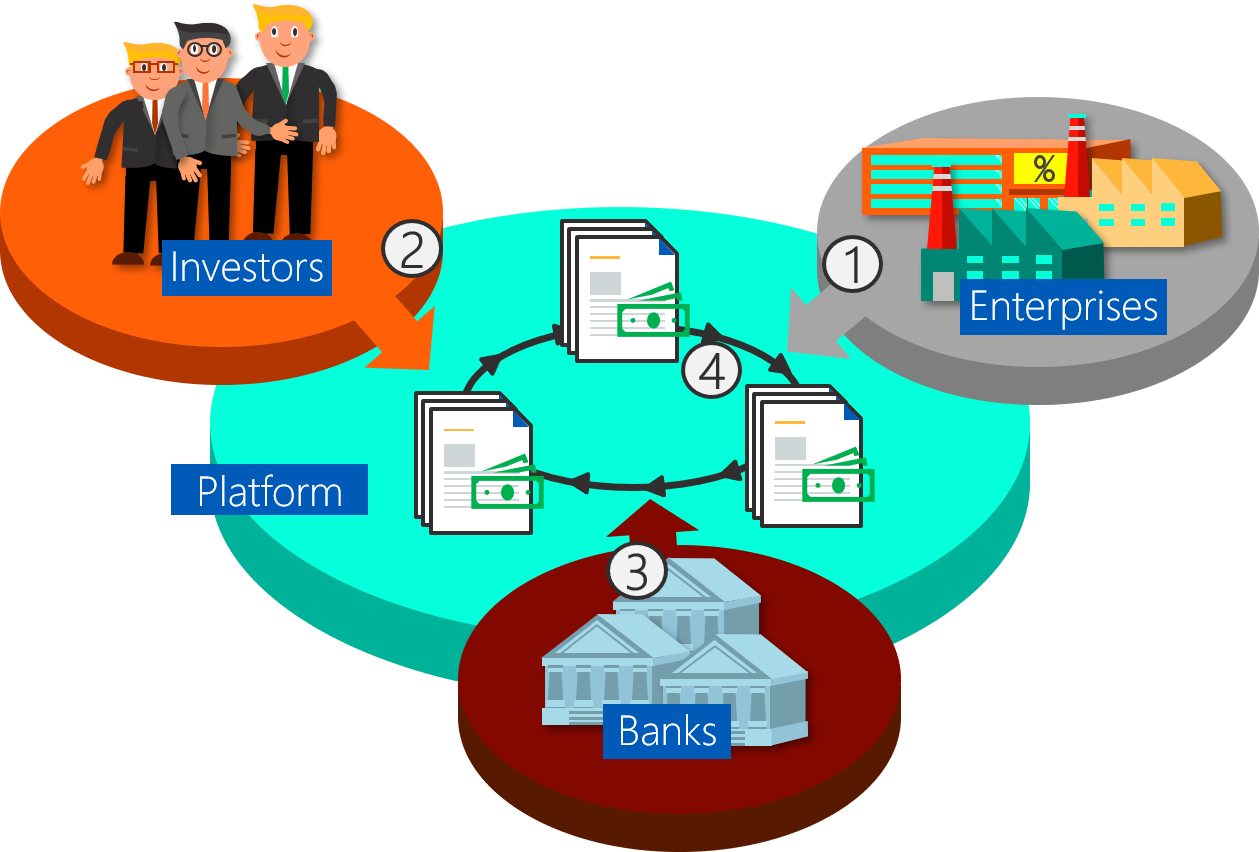
The Schuldschein market has seen an unseen spring of digital platforms, offering a digitized Schuldschein process, and supporting the boost of the Schuldschein in terms of transaction volume and deal numbers. The traditional process bears several inefficiencies that can easily tackled by shifting the process onto a digital platform. A platform can enhance standardization, transparency and processing time significantly. This article provides a current view on the platform evolution in the Schuldschein market.

From being a traditional niche product, the Schuldschein has evolved to being a serious alternative for other financing products: The traditional deed-based instrument, Germany-based and once owning a rather sedate and dusty reputation, now also attracts growing interest in international markets. With lower documentation requirements than a bond, higher transaction volumes than a loan, combined with a high level of standardization, the Schuldschein more and more stands out as a save and appealing way to invest and an uncomplicated way for companies to acquire external financing.

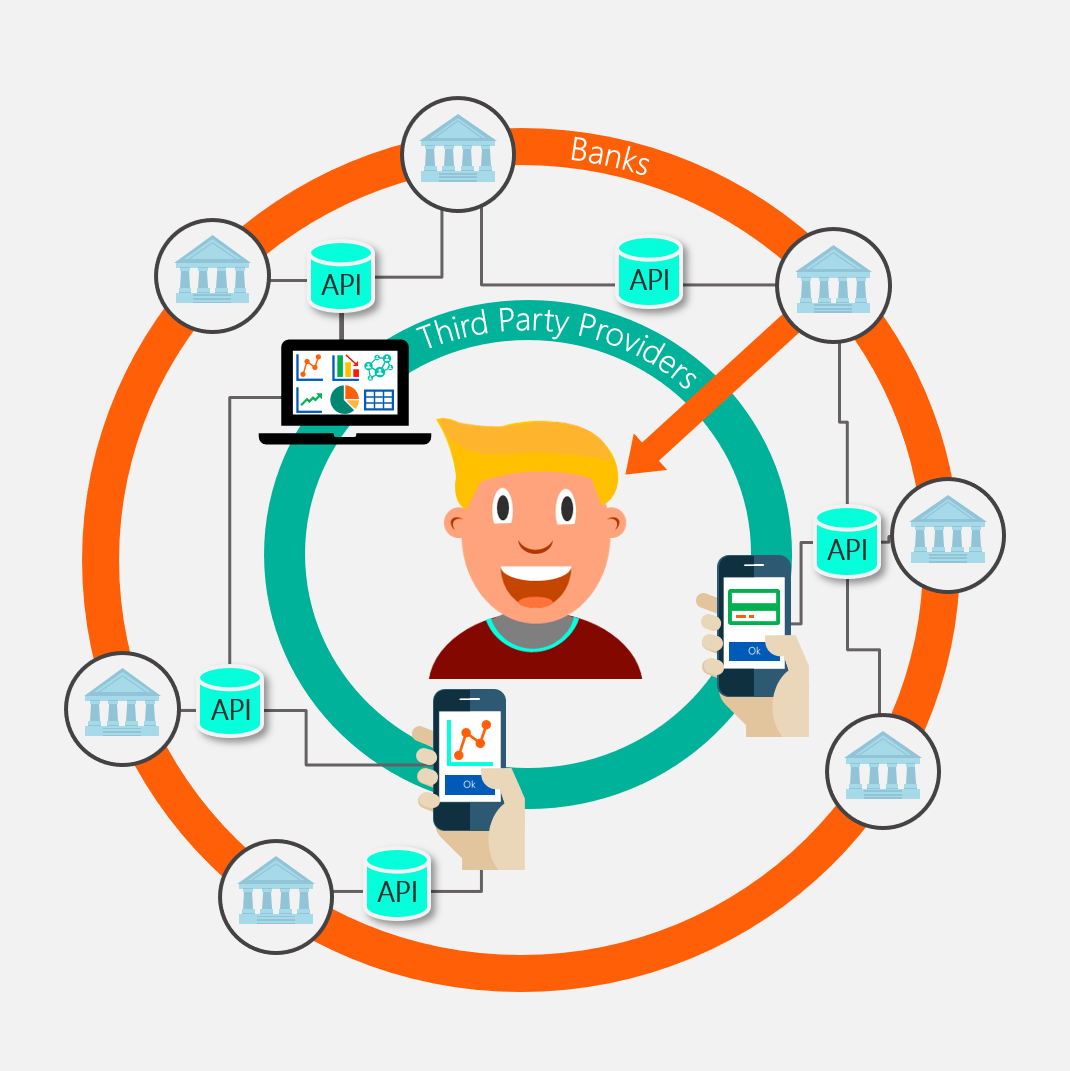
Open Banking or API Banking - the opening of the traditional banking sector to third-party companies – has become a major topic in finance. It’s not only the new Payment Services Directive (PSD2) of the EU, affecting all banks located in the EU, that leads to an energized, pioneering atmosphere. More and more IT-driven developments result in banks having to deal with the question of how to position themselves in a future market with not only plenty of new business opportunities, but also numerous new competitors on the rise. Open Banking is certainly strongly transforming the financial sector. It challenges the traditional structures and has the potential to revolutionize the entire industry.
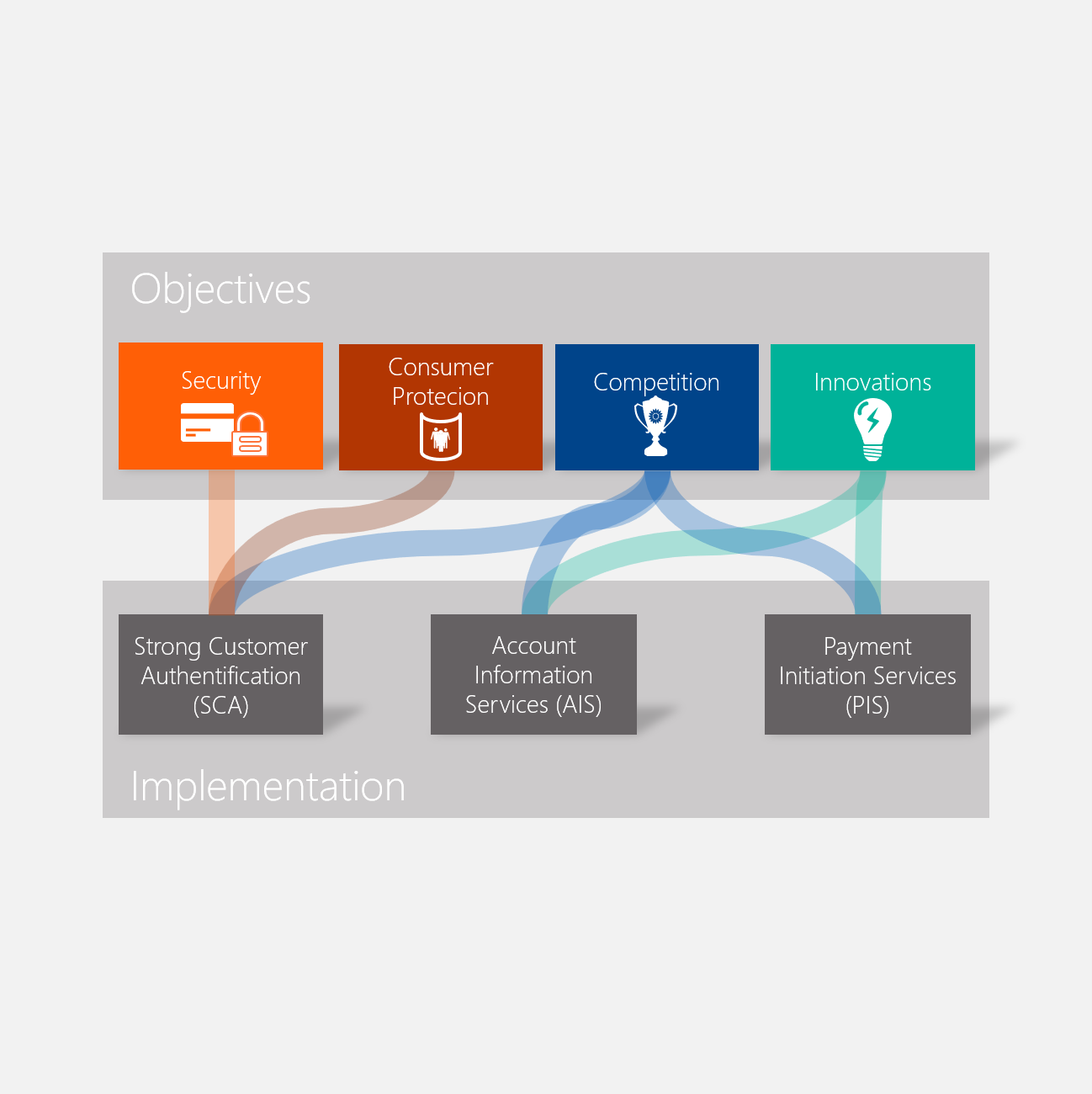
In financial industry, there’s hardly any topic that is being discussed more controversially than the PSD2, the "Payment Services Directive 2" of the EU. The directive entered into force on September 14, after a year and a half of preparation time. The new directive requires all banks in the EU to revise their security concepts and communication interfaces. This confronts institutions with the issue of an opening up of the industry to third-party providers and, in a broader context, the digitization and restructuring of the financial world.
PSD2 is the driving force of the concept of open banking in Europe and it is also shifting paradigms internationally.

In the world of established business processes, Robotic Process Automation (RPA), or short Robotics, is on everyone’s lips. As a tool to automate well-defined but time-consuming repetitive standard processes in a cost-effective way, RPA has versatile applications.
Latest Articles
The Minimum Bail-in Data Template replaces the previous Bail-in Data Set.
Initial submissions are required this year as part of dry runs. Our insight highlights current developments and solution approaches.

Find out more about PHACCT, our high-performance solution for portfolio fair value hedge accounting, developed with pbb Deutsche Pfandbriefbank The modern web application fully maps the hedge process, offers full transparency and seamless integration into existing IT landscapes PHACCT enables faster processes, lower costs and flexible data access for future-proof banking solutions.

The EU is actively working on creating a digital supplement to existing cash - the digital euro (D€). The introduction of such a means of payment would probably bring about a major change in all payment transactions, from everyday shopping in the supermarket to the offers of a commercial bank, which is why it is definitely advisable to take a closer look at this concept. We have summarized the reasons for creating such a means of payment, what exactly is currently planned and what the technical and legal basis for it should look like.
Finbridge conducted a Benchmarking Study in the field of Resolution Planning. This posting gives an overview of the study’s essential findings and an outlook for 2024.

Finbridge is your partner for ML services in finance & banking. Using Machine Learning (ML), we drive innovation, increase efficiency, and improve the customer experience. Our AI solutions support areas such as customer service, risk management, process automation and data analytics. We offer modular ML solutions from our extensive ML toolbox and adapt them flexibly to your needs, whether through customised consulting projects or efficient software packages. Discover business cases for successful use cases.
In December 2019, the European regulatory authorities introduced the IFR and the IFD as a new prudential framework for investment firms. The present insight discusses some of the IFD/IFR mandates subsequently issued by the EBA und gives an overview of present and upcoming requirements.

pbb Deutsche Pfandbriefbank AG, a leading specialist bank for real estate and public investment finance, collaborated with Finbridge, a consulting firm specializing in financial services, to modernize the hidden reserves/losses (HRL) process. By employing automation and machine learning, the partnership aimed to improve data analysis and make the process more efficient.
Both the ECB and the EBA are currently working in parallel on the topic of an integrated reporting system. This shall allow financial institutions to provide comparable, uniform and redundancy-free data. In this article, we give an overview of current delevopments and explain the application using concrete examples.
Liquidity in Resolution is one of the seven dimensions of the EfB and one of the current working priorities of the SRB. Apart from further literature about liquidity by the FSB and the ECB, the SRB has published three publications about liquidity in resolution on its website. We analyse the content of these publications and give an overview of existing and upcoming requirements.
Insurers must address fundamental strategic issues. It is more important than ever to anticipate emerging trends and prepare for change. For insurers to keep up, they need to leverage targeted technologies to increase digital maturity across the entire customer relationship and value chain and provide their customers with a seamless, unique and tailored service experience. Tomorrow's insurers will have little in common with those of today. Six theses on how new technologies and the availability of enormous amounts of information will fundamentally change the world of insurers.
About eight years ago, the Single Resolution Mechanism entered into force and only shortly after, the Single Resolution Board (SRB) began its work in Brussels. Since then, many areas of resolvability planning have progressed well and banks are receiving ever more specific guidance and obligations. An overview of recent publications and current priorities.


The wider acceptance and active development of machine learning techniques and data analytics have made it possible to optimize and automate business processes. This presents a lucrative opportunity for banks to redesign their operations to cut processing times and improve transparency. We present the potential of these techniques by applying a machine learning approach to a hidden reserves/losses process that can often be found in the finance departments of banks.

In recent years the financial system’s regulators have worked towards discontinuing the existing reference rates for unsecured lending within the interbank market (IBOR, Interbank Offered Rate). Consequently, the important LIBOR (London Interbank Offered Rate) will most likely not be published anymore already by end of 2021.
That is why banks need to adapt their IT-systems towards a new interest-methodology to be able to offer lending being based on the new reference rates.
![Hedge Accounting [Part 2]: Prospective Testing and the Risk Induced Fair Value](https://images.squarespace-cdn.com/content/v1/54f9ea6be4b0251d5319ad8b/1592205162143-L919DBQ2UQF59D4R9WFH/jeff-fan-29ebQh7e78M-unsplash.jpg)
According to IFRS9, the prospective test is, with a few exceptions, to be used for assessing the effectiveness of hedge relationships. In the second of two parts, we present the implementation of the prospective test according to the Risk Induced Fair Value approach as well as its challenges in implementation.
![Hedge Accounting [Part 1]: Prospective Testing and the Risk Induced Fair Value](https://images.squarespace-cdn.com/content/v1/54f9ea6be4b0251d5319ad8b/1591683719107-BDZ43MTDO65RH9XKXBG6/christopher-burns-FUh6nK3s0po-unsplash.jpg)
The IASB regulations in the IFRS 9 Standard came into effect within the EU on 1 January 2018 with the aim to replace the previous approach of the IAS 39. In hedge accounting, the prospective effectiveness test becomes increasingly important in this new standard. Companies are also given the option of initially continuing to account for the effectiveness of hedge relationships in accordance with IAS39. The first part of the two-part article presents the effect of the regulatory requirements on the prospective test.
In the course of teh transition to ISO20022, the European payments infrastructure will change fundamentally and enormous opportunities in terms of process efficiency and an optimized customer experience will open up. Even though the integration of the standard is not mandatory from a regulatory perspective: To keep pace with international developments, extensive implementation projects lay ahead of European banks. In this article, we provide a brief overview of what is at stake and when the changes will take effect.
The Schuldschein market has seen an unseen spring of digital platforms, offering a digitized Schuldschein process, and supporting the boost of the Schuldschein in terms of transaction volume and deal numbers. The traditional process bears several inefficiencies that can easily tackled by shifting the process onto a digital platform. A platform can enhance standardization, transparency and processing time significantly. This article provides a current view on the platform evolution in the Schuldschein market.
From being a traditional niche product, the Schuldschein has evolved to being a serious alternative for other financing products: The traditional deed-based instrument, Germany-based and once owning a rather sedate and dusty reputation, now also attracts growing interest in international markets. With lower documentation requirements than a bond, higher transaction volumes than a loan, combined with a high level of standardization, the Schuldschein more and more stands out as a save and appealing way to invest and an uncomplicated way for companies to acquire external financing.

Managers of every level refer to the one or the other BI method to master the challenges of their daily work life and also the business departments employ BI techniques to get most out of their data. However, only few make use of the plethora of powerful self-service BI tools (SSBI tools) available on the market.
Thus, this article elaborates on the potential of BI in general and SSBI tools in particular. We summarize pros and cons and compare these to the well-known and very individual MS Excel & Access dashboard solutions.
Find Content